
-
ApplicationOffering comprehensive drone solutions, ranging from drone-based agricultural pest control and landscaping to inspection & security, epidemic prevention and disinfection, as well as custom manufacturing services.

-
ProductYou can explore products such as the S50, S60, S100, S20 and other agricultural drones, inspection and security drones, the F70 unmanned vehicle, as well as drone countermeasures equipment.
-
SupportOffering comprehensive online services, including product information, after-sales materials, operation videos, training presentations, science education content, drone pilot license inquiries, and insurance services.
-
CollaborationWe are recruiting nationwide for regional agency partners, drone OEM/ODM manufacturing collaborations, science education partnerships, visit-and-learning initiatives, and collaborative university-industry programs.
-
NewsGet the latest and most comprehensive news on Tianying Brothers—covering product updates, application case studies, industry insights, and more—to stay fully informed about cutting-edge drone developments.
-
About UsFocusing on innovative R&D and production of drone technology tailored for the industrial sector, our products are applied across a wide range of scenarios, including agricultural pest control, epidemic prevention and disinfection, inspection and monitoring, security surveillance, emergency response, data collection and analysis, as well as drone management systems.
News and Information
[South Daily] Drones Enable Huizhou Agriculture to "Soar to New Heights"
Time:2021-10-25
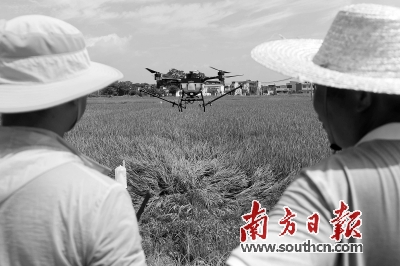
White Dew has passed, and the weather is gradually cooling down. In Longmen, Huizhou, rice crops are now in the vigorous stage of tillering and heading—precisely when hidden pests and diseases begin to show signs of outbreak. In years past, this would have been the busiest time for farmers, with fields bustling as they carried large sprayers on their backs, manually operating valves with one hand while controlling the spray nozzles with the other. But today, these scenes have been largely replaced by fleets of high-flying agricultural drones performing precision crop protection tasks.
In recent years, amid the wave of agricultural technology and modernization, plant protection drones have seen rapid adoption and widespread use, proving their invaluable role in integrated pest and disease management for crops. Not only have these advancements significantly boosted agricultural efficiency, but they’ve also freed up labor to a large extent. As a result, professional "drone pilots" are increasingly emerging as a new and growing career path.
As a green agricultural product production and supply base in the Guangdong-Hong Kong-Macao Greater Bay Area, how is the specialized plant protection service currently operating in Huizhou? And under these new business models, what development bottlenecks are service organizations and practitioners facing?
Integrated pest management becomes mainstream: "Drones take off more frequently—farmers spend less time in the fields."
Above the rice fields in Jiuliang Village, Longtian Town, Longmen, two drones are carrying out aerial spraying operations. In mid-air, the drone wings whir loudly as the rice paddies ripple and undulate rapidly, mimicking the surface of water. Fine mist-like droplets of pesticide are evenly dispersed across the crop surfaces. Within just a few minutes, the aerial application on over ten acres of rice is complete. Afterward, the operators expertly guide the drones to land, swap out the batteries, and refill the tanks with fresh pesticide solution—before the drones take off once again, heading toward another patch of rice fields.
The rice fields before us are cultivated on land contracted by Chen Liwen, a large-scale farmer. In 2017, he leased 900 acres of barren land through land transfer to develop large-scale rice farming. However, growing rice on such a massive scale is no easy task—especially during peak periods when pests and diseases are most likely to strike. Without timely application of pesticides to protect the crops, there’s a serious risk of widespread outbreaks, potentially leading to significant yield losses.
This year, Chen Liwen brought in a professional plant protection team, and under the skilled operation of two experienced "drone pilots," they completed the entire pest and disease control work in just two days—achieving unified, synchronized treatment across the region's rice crops within the same timeframe.
"Now it’s drones taking off more often—so we’re spending less time in the fields." Liang Riguang, a large-scale rice farmer and a beneficiary of drone-based integrated pest management, manages 120 acres of rice paddies. Previously, during peak farming seasons, he and his wife would wake up at the first light of dawn to prepare pesticides, then strap on their 40-pound pesticide sprayers and head out into the fields—sometimes even braving scorching heat while applying chemicals that often left them coughing from exposure to the fumes.
He did the math: If you hire workers to spray the fields, even the most efficient ones can only cover up to 10 acres a day. Without factoring in pesticide costs, labor alone racks up a hefty 150 yuan per day—and sometimes it’s not even easy to find enough workers. But now, with drone-based pest control, a single drone can handle 200 to 300 acres daily. Best of all, the service fee is just 60 yuan per acre, which also includes the cost of pesticides. “Efficiency has increased by 15 times, spraying becomes much more thorough, leading to fewer pests and diseases—and ultimately better results.”
Journalists learned that many other farmers, like Chen Liwen and Liang Riguang, have also chosen to use drone-based aerial spraying for their crops. Leveraging machinery to boost agricultural efficiency is gradually gaining widespread recognition—and in fact, this practice is already far from new on the fertile fields of Huizhou agriculture.
"Professionalized, unified pest management has clearly improved control effectiveness, reducing pesticide usage by nearly 20%," introduced Li Hua, head of the Plant Protection Department at Huizhou City Agricultural and Rural Comprehensive Service Center. He added that in traditional farming practices, issues like "difficulty in applying pesticides effectively" and "inappropriate or indiscriminate spraying" often arose on an individual household basis. However, through professionalized, unified pest management, it’s now possible to significantly achieve the "Four Reductions and Four Improvements": reducing pesticide use, minimizing pesticide residues, cutting labor costs, and lessening environmental pollution; while simultaneously boosting the speed of pest and disease control, enhancing prevention and treatment outcomes, improving pesticide efficiency, and elevating the quality of agricultural products.
Data shows that in 2019, Huizhou city implemented unified pest control across 4.3 million mu-times, with the city-wide coverage rate for rice pests and diseases reaching 41.27%—5.27 percentage points higher than the provincial average. Notably, Longmen County saw a significant increase in its unified pest control coverage, with the rate soaring to 50.65% in 2019, covering over 800,000 mu-times. Among these, specialized pest control service organizations carried out operations on more than 400,000 mu-times, earning the county a place on the first batch of the national list recognizing exemplary counties pioneering professional "unified pest control" initiatives for crop diseases and pests.
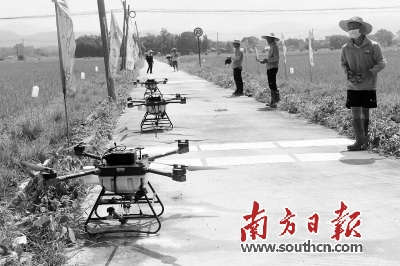
A significant shortage of skilled professionals has emerged, prompting the rise of drone "pilot" training programs.
The rise of specialized, unified pest control service organizations in Huizhou is directly linked to the broader trends and growing market for agricultural modernization. Previously, statistics showed that in highly modernized agricultural countries like the United States and Japan, the penetration rate of plant protection machinery exceeds 50%, whereas domestically, this figure remains below 5%. However, with the increasing maturity of technologies behind plant protection drones and specialized pesticides, experts predict that by 2022, China’s drone-based plant protection market could expand to a staggering 30 billion yuan.
Currently, more and more local agricultural cooperatives, agricultural machinery cooperatives, and enterprises in Huizhou are starting to focus on drone-based crop protection services—such as providing aerial spraying services, as well as maintenance and repair offerings. However, as the market gradually opens up, there remains a severe shortage of highly skilled professionals who can accurately identify pests and diseases, understand pesticide applications, operate drones effectively, perform routine maintenance, and deliver top-quality pest control services.
This April, Huizhou's first training school specializing in the application of crop protection drone technology was established in Huicheng District. The school has since held three consecutive rounds of instructional training, graduating over 30 local "new farmers" from Huizhou who have earned relevant professional certifications. These newly certified professionals are now set to bring much-needed technical expertise to specialized, unified pest-control efforts across Huizhou's townships and rural areas.
"Our trainees come from crop protection personnel, large-scale farmers, and agricultural pest-control teams not only in Huizhou but also across eastern Guangdong Province. We’ve hired professional instructors to deliver targeted training on agricultural drone technology for crop protection," explained Li Yanfang, General Manager of Huizhou Dragonfly Plant Protection Technology Co., Ltd. She added that the training facility employs a structured teaching approach, enabling participants to quickly grasp essential knowledge—including pesticide basics, drone applications, and maintenance—as well as practical skills through indoor simulations and hands-on field exercises, ultimately enhancing their proficiency in drone operation and upkeep.
"Plant protection drones represent cutting-edge, high-tech agricultural technology," said Li Yanfang. "After undergoing specialized training and obtaining certification, operators can confidently take up their roles—playing a crucial role in promoting the use of these drones and ensuring the safe, efficient production of food."
In fact, in recent years, agricultural authorities—from the national level down to local governments—have vigorously promoted specialized and unified pest control services. These services are carried out by professional service organizations equipped with the necessary plant protection expertise and advanced technologies, providing socialized, large-scale, and intensive crop disease and pest management solutions. Meanwhile, a growing atmosphere of learning and collaboration among specialized professionals has emerged, significantly boosting practitioners' dedication and commitment to their roles.
On September 13, Wang Chao, a young drone "pilot" from Dragonfly Plant Protection, represented Huizhou in the Guangdong provincial preliminary round of the 3rd National Agricultural Industry Crop Protection Technician Skills Competition, held in Luoding, Yunfu. The competition, specifically designed for drone pilots, drew 54 participants from agricultural and rural departments, agricultural technology extension agencies, professional plant protection service organizations, and cooperatives across 21 cities in the province. The event featured two key components: a theoretical knowledge test and a hands-on drone-based crop protection competition.
Although Wang Chao ultimately won only the Excellence Award, meeting with numerous drone “pilots” gave him a strong sense of professional belonging. "I need to stay motivated to keep learning and explore even greater opportunities for growth," Wang Chao said.
It is understood that, driven by the growing demand for specialized, unified pest-control services in the agricultural sector and the continuous advancement of science and technology, the number of local specialized organizations and professionals in Huizhou has been steadily increasing year after year. However, Li Hua frankly admitted that current fiscal allocations from Huizhou's various levels of government for public-benefit-oriented plant protection and pest-control organizations remain insufficient—despite the introduction of subsidies for agricultural machinery purchases, these measures still fall far short of meeting the needs.
"Li Hua stated, 'We need to strengthen support for building professional pest-control teams dedicated to public welfare initiatives, thereby accelerating the rapid development of specialized, unified pest management efforts.' Currently, the Huizhou Agricultural and Rural Comprehensive Service Center is actively supporting the establishment of a group of highly capable, reliable, and effective pest-control service teams—teams that can be deployed quickly, utilized efficiently, and deliver outstanding results—in order to significantly enhance the efficacy of disease and pest prevention and control. At the same time, we’re intensifying efforts to introduce drone-based aerial spraying services for crop protection, expanding the scope of unified pest management. This initiative aims to integrate agricultural machinery services with professional, unified pest-control practices, continuously improving service quality and standards while speeding up the advancement of agricultural modernization across the city.'"
More professional crop protection organizations are emerging, enabling "foolproof" farming and agricultural work.
Agricultural drone-based unified pest control has emerged only within the past 4 to 5 years, making it a relatively new agricultural machinery. In the face of seasonal, sudden outbreaks of plant diseases, crop protection drones deliver precise pesticide application—resulting in excellent efficacy, significant water and chemical savings, and remarkable time- and labor-efficiency. As a result, they’ve quickly become a favorite tool among farmers working in the fields.
In recent years, with high-tech companies like Shenzhen-based DJI and Zhuhai-based XAG joining the ranks of agricultural drone manufacturers, this cutting-edge farming equipment has been rapidly advancing. Meanwhile, in Huizhou's grassroots agricultural sector, organizations offering specialized aerial pest-control services are also experiencing rapid growth.
The organization providing specialized drone-based pest control services to Chen Liwen is the flight team from Huizhou Gufeng Agricultural and Forestry Service Co., Ltd. Established four years ago, the team’s captain, Li Zhitao, has witnessed firsthand the entire journey—from the rise of drones to their widespread adoption in agriculture. His deeply tanned skin bears witness to the hard work involved in long hours spent outdoors. "During peak farming seasons," he explains, "I head out to the fields by 6:30 a.m., returning just after 11 a.m. for a quick lunch and a brief rest. At the same time, I’m juggling the task of charging batteries for dozens of drones—each one needs its turn—before hopping back into action at 4 p.m."
In fact, when the team was first formed, many farmers were skeptical about this new initiative. Li Zitao, however, took to the skies in an airplane, demonstrating the process in various townships—and once the results became clear, orders started pouring in.
For Li Zitao, operating a plant protection drone is actually quite simple—it could even be described as "foolproof." He demonstrated to the reporter how it’s done, holding in his hand a controller that closely resembles a "gamepad": First, he measures and locates the area, then uses a mobile app to map out the spraying zone into a flight path. After that, he loads the pesticide, checks everything, and takes off—after which the drone automatically flies along the preprogrammed route to carry out its task. Throughout the process, all he needs to keep an eye on is the drone’s battery level and the remaining pesticide supply; "if either runs low, just land immediately and swap them out."
What may seem like a simple operation actually draws on years of hands-on experience. "Initially, I worked with oil-powered single-rotor drones, but they lacked both sensitivity and ease of control. Now, thanks to the maturing hardware and software technologies in agricultural drones, electric multi-rotor models equipped with GPS systems are far better suited for fieldwork," Li Zitao admits. He adds that many fields have irregular shapes—some areas are higher, others lower—and are further complicated by external factors like weather, temperature, and wind speed. As a result, drones occasionally encounter minor mishaps, requiring operators to adapt quickly and think on their feet.
"Working on lotus fields is my biggest fear—once the drone 'crashes' into the pond, it’s basically scrap," says Li Zitao. He adds that a qualified "drone operator" should not only have solid knowledge of agricultural pest control but also be able to read weather patterns and terrain, as well as understand basic mechanical repair and maintenance. Operating the drone itself, after all, is just the bare minimum requirement.
“Flight safety is also critical—there have already been incidents elsewhere where drones accidentally injured farmers,” said Li Zitao. He added that during every aerial spraying operation, a team member is stationed across from the fields to keep watch, ensuring no farmers inadvertently enter the operational area and risk getting grazed by the drone’s rotating wings.
It is understood that the Guifeng Agricultural and Forestry Drone Team currently has more than 20 "pilots" and operates 25 active plant protection drones, primarily serving towns and rural areas in Huizhou and surrounding cities. Their crops include rice, sweet potatoes, sweet corn, and more, with an average annual operational area of approximately 100,000 mu. Meanwhile, their customer base continues to expand. At the end of 2019, the Guifeng Agricultural and Forestry Drone Team was honored as a nationally recognized star-rated integrated pest management service organization—a distinction that makes them the only locally grown service provider from Huizhou to earn this prestigious title.
The Gu Feng Agricultural and Forestry UAV Defense Team is a prime example of a specialized, unified pest-control organization in Huizhou. According to statistics, there are currently 21 professionally managed pest-control service organizations registered or licensed with Huizhou's industrial and commercial authorities—each of significant scale and influence—and they collectively operate more than 100 drones.