
-
ApplicationOffering comprehensive drone solutions, ranging from drone-based agricultural pest control and landscaping to inspection & security, epidemic prevention and disinfection, as well as custom manufacturing services.

-
ProductYou can explore products such as the S50, S60, S100, S20 and other agricultural drones, inspection and security drones, the F70 unmanned vehicle, as well as drone countermeasures equipment.
-
SupportOffering comprehensive online services, including product information, after-sales materials, operation videos, training presentations, science education content, drone pilot license inquiries, and insurance services.
-
CollaborationWe are recruiting nationwide for regional agency partners, drone OEM/ODM manufacturing collaborations, science education partnerships, visit-and-learning initiatives, and collaborative university-industry programs.
-
NewsGet the latest and most comprehensive news on Tianying Brothers—covering product updates, application case studies, industry insights, and more—to stay fully informed about cutting-edge drone developments.
-
About UsFocusing on innovative R&D and production of drone technology tailored for the industrial sector, our products are applied across a wide range of scenarios, including agricultural pest control, epidemic prevention and disinfection, inspection and monitoring, security surveillance, emergency response, data collection and analysis, as well as drone management systems.
News and Information
During the 14th Five-Year Plan period, China's drone industry development is becoming increasingly clear.
Time:2021-12-10
However, while China's drone industry has achieved robust growth and delivered notably positive results, it has also encountered certain challenges and obstacles. For instance, drones remain too costly, their market penetration remains relatively low,续航能力 is insufficient, there’s a shortage of specialized talent, safety incidents occur frequently, market monopolies are evident, and competition within the industry has become overly intense. These issues have significantly hindered—or even slowed down—the industry’s progress. Moving forward, targeted and effective solutions will be needed across various fronts. Fortunately, the current situation and its underlying problems are now clearly visible, making it easier to define the future trajectory and direction of China’s drone industry.
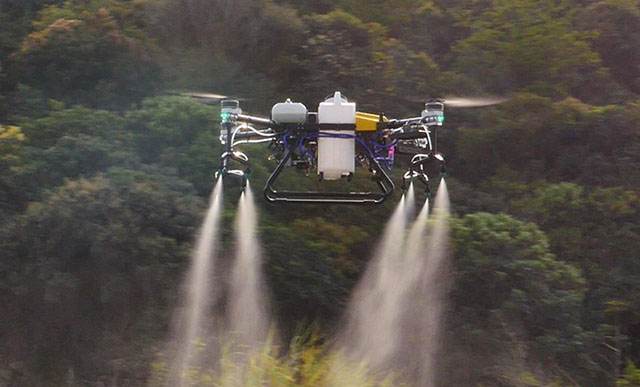
China Achieves Milestones in UAV Development
During the 13th Five-Year Plan period, as China’s demographic dividend continued to diminish and demand for automation steadily grew, the country’s drone industry gradually transitioned from its early stages into a phase of rapid growth. Beyond the significant role played by applications and market needs, the industry has also achieved impressive results in terms of market size and expansion rate. According to relevant data, China’s drone industry already reached an output value of 50 billion yuan in 2019, while the number of drone-related enterprises surpassed 6,000. By around 2023, the domestic drone market is expected to exceed 100 billion yuan in scale.
During this process, sustained positive factors such as favorable policies, capital inflows, and corporate investments have steadily propelled industry development, giving rise to several distinct characteristics. Among these, the most notable is the rapid ascent of civilian drones. With both consumer and industrial markets now fully open, civilian drones have easily surpassed military drones in terms of market size, emerging as the key driving force behind the overall growth of the drone industry. According to relevant data, by 2020, China’s civilian drone market had already exceeded 21 billion yuan.
Meanwhile, the clustering effect within the drone industry is also becoming increasingly pronounced. On one hand, with more and more drone companies emerging—ranging from drone manufacturing and system integration to component production and consumer services—highly competitive, top-tier firms are beginning to rise to prominence. On the other hand, drone industrial parks, spearheaded by China's strategic initiatives, are popping up rapidly across the country. As a result, drone development is shifting toward key regions such as South China, North China, and Central China, marking a clear transition from fragmented operations toward concentrated growth. This trend underscores the growing momentum toward industry clustering and regional specialization.
Moreover, industry applications are becoming increasingly widespread, diverse, and deeply integrated, while the associated supporting infrastructure is also steadily improving. In terms of applications, drones have already reached near-saturation in consumer sectors like aerial photography and leisure entertainment, while their use in industrial fields such as logistics and agricultural pest control is rapidly expanding. Meanwhile, on the supporting front, frequent policy announcements related to drones, the emergence of new drone-related professions, the booming market for drone talent training, and the growing development of the after-sales service sector are all bringing positive momentum to the industry.
Future challenges and trends are increasingly coming to the fore.
However, while China's drone industry has achieved solid growth and delivered notably positive results, it has also encountered certain challenges and obstacles. For instance, drones remain too costly, their market penetration remains relatively low,续航能力 is insufficient, there’s a shortage of specialized talent, safety incidents occur frequently, market monopolies are evident, and competition within the industry has become overly intense. These issues have significantly hindered—or even slowed down—the industry’s progress. Moving forward, targeted and effective solutions will be needed across various fronts. Fortunately, the current situation and its underlying problems are now clearly visible, making it easier to define the future trajectory and direction of China’s drone industry.
Under this new framework, driving the transformation of China's drone industry during the 14th Five-Year Plan period has become the top priority. Currently, drone applications in entertainment and consumer sectors—such as aerial photography—are already approaching saturation, while industrial fields like agriculture, crop protection, logistics delivery, and traffic management are increasingly gaining traction. To further fuel market growth and accelerate the shift from consumer to industrial applications, it’s essential to act swiftly. At the same time, as drone usage expands across more industries, we must also expedite the transition from a single-market focus to diversified markets—and move away from prioritizing breadth in applications toward emphasizing depth and specialized capabilities instead.
Capturing the growing demand in the drone market and driving the integrated, specialized, diversified, intelligent, and personalized development of drones is undoubtedly the only viable path forward. Integration emphasizes the seamless convergence of various information technologies and core components; specialization focuses on expertise in technology, functionality, talent, and service delivery; diversification ensures a wider range of product types, application areas, and pricing options; while intelligence and personalization highlight smarter product features, more natural human-machine collaboration, and tailored, highly precise services. Accelerating these "five transformations" is absolutely critical!
Of course, strengthening and upgrading industry regulation is also a top priority when it comes to addressing the current challenges facing the drone industry. Whether it’s fierce industry competition, substandard product quality, chaotic market order, or frequent safety concerns with products—these issues all stem from the lack of adequate oversight and effective control by relevant authorities over aspects such as the industry itself, product standards, companies, technologies, and applications. To tackle this, on one hand, our government needs to enhance interdepartmental supervision, refining regulatory frameworks and legal systems. On the other hand, the industry and individual companies must actively embrace their role in fostering responsible oversight. Only by combining these two approaches can we ensure the healthy and orderly advancement of the drone sector.